What Pipe Fusion Services Deliver That Mechanical Joints Simply Can't
When it comes to joining pipes in demanding industrial, municipal, and infrastructure applications, the method used to create that connection has a direct and lasting impact on how the entire system performs under pressure, stress, and time. Mechanical joints have served the industry for decades, but they come with inherent limitations that become increasingly apparent as systems age, operating demands increase, and the cost of maintenance and failure grows harder to absorb.
A thermally fused joint eliminates many of the vulnerabilities that mechanical connections introduce, delivering a level of strength, leak resistance, and long-term reliability that mechanical jointing methods simply cannot replicate, regardless of how precisely they are installed. Understanding what sets fusion apart from mechanical alternatives helps engineers, project managers, and facility operators make more informed decisions about the jointing method that will serve their systems most effectively for the decades ahead.
Delivering a Truly Monolithic and Leak-Free Connection
According to IMARC Group's HDPE Pipes Market Report for 2025, the United States held over 78% of the North American HDPE pipe market share in 2025, driven by over six billion dollars in federal water infrastructure funding for fiscal year 2025 alone, which reflects just how significant the investment in durable and high-performance piping systems has become across the country.
Professional pipe fusion services create a joint that is molecularly bonded rather than mechanically clamped, producing a connection where the joined material becomes structurally indistinguishable from the pipe itself rather than a separate component held together by gaskets, bolts, or compression fittings. A mechanical joint, by contrast, relies on physical compression and sealing materials that are inherently susceptible to degradation, loosening, and eventual leakage under the thermal cycling, ground movement, and pressure fluctuations that real-world piping systems routinely experience throughout their operational lifespans.
Withstanding Pressure Surges That Mechanical Joints Cannot Handle
Piping systems in water, wastewater, and industrial applications frequently experience pressure surges and water hammer events that place sudden and extreme stress on every joint in the system, and the response of each connection type to that stress determines whether the system holds or fails at the most critical moment.
Pipe fusion services produce joints that are as strong as or stronger than the pipe wall itself, which means that when a pressure surge travels through the system, it does not find a weak point at the joint where failure is most likely to initiate in a mechanically connected system. Mechanical joints are almost always the first component to fail under surge conditions because the gaskets and clamps that hold them together were never designed to withstand the same internal forces that the pipe body can absorb, creating a predictable and costly failure pattern that fused systems avoid entirely.
Eliminating the Infiltration and Exfiltration That Plagues Mechanical Connections
Groundwater infiltration into sewer systems and effluent exfiltration into surrounding soil are two of the most persistent and costly problems in municipal infrastructure management, and both are dramatically more common in systems that rely on mechanical joints rather than thermally fused connections throughout the pipeline network.
Pipe fusion services eliminate the discrete joint interfaces where infiltration and exfiltration occur by creating a continuous, seamless pipe wall that gives groundwater and system contents no pathway to cross the pipe boundary in either direction under any combination of external pressure and internal conditions. Mechanical gaskets that are exposed to soil chemistry, root intrusion, and cyclical loading over decades of service will inevitably degrade in ways that create gaps at the joint interface, which is why older mechanical systems so consistently require costly rehabilitation work while fused HDPE systems continue to perform without intervention for the same period of time.
Performing Reliably in the Demanding Conditions of Bypass Operations
Sewer and water bypass system installation and removal is one of the most demanding applications for any piping connection method because bypass systems are deployed quickly, subjected to immediate and full operational loads, and then disassembled and redeployed across multiple projects throughout their service life, placing repeated stress on every joint in the system throughout each deployment cycle.
Pipe fusion services provide the strong, consistent connections that bypass system piping requires to hold up under those conditions without developing leaks, separating under surge, or requiring frequent inspection and re-tightening in the way that mechanical joints typically demand when subjected to the same cycle of deployment, operation, and removal. A bypass system with fused connections can be relied upon to perform at full capacity from the moment it is commissioned, which is a critical advantage in time-sensitive infrastructure projects where system failure during active bypass operations creates immediate safety, regulatory, and financial consequences for everyone involved in the project.
Providing the Structural Integrity That Pump Systems Demand
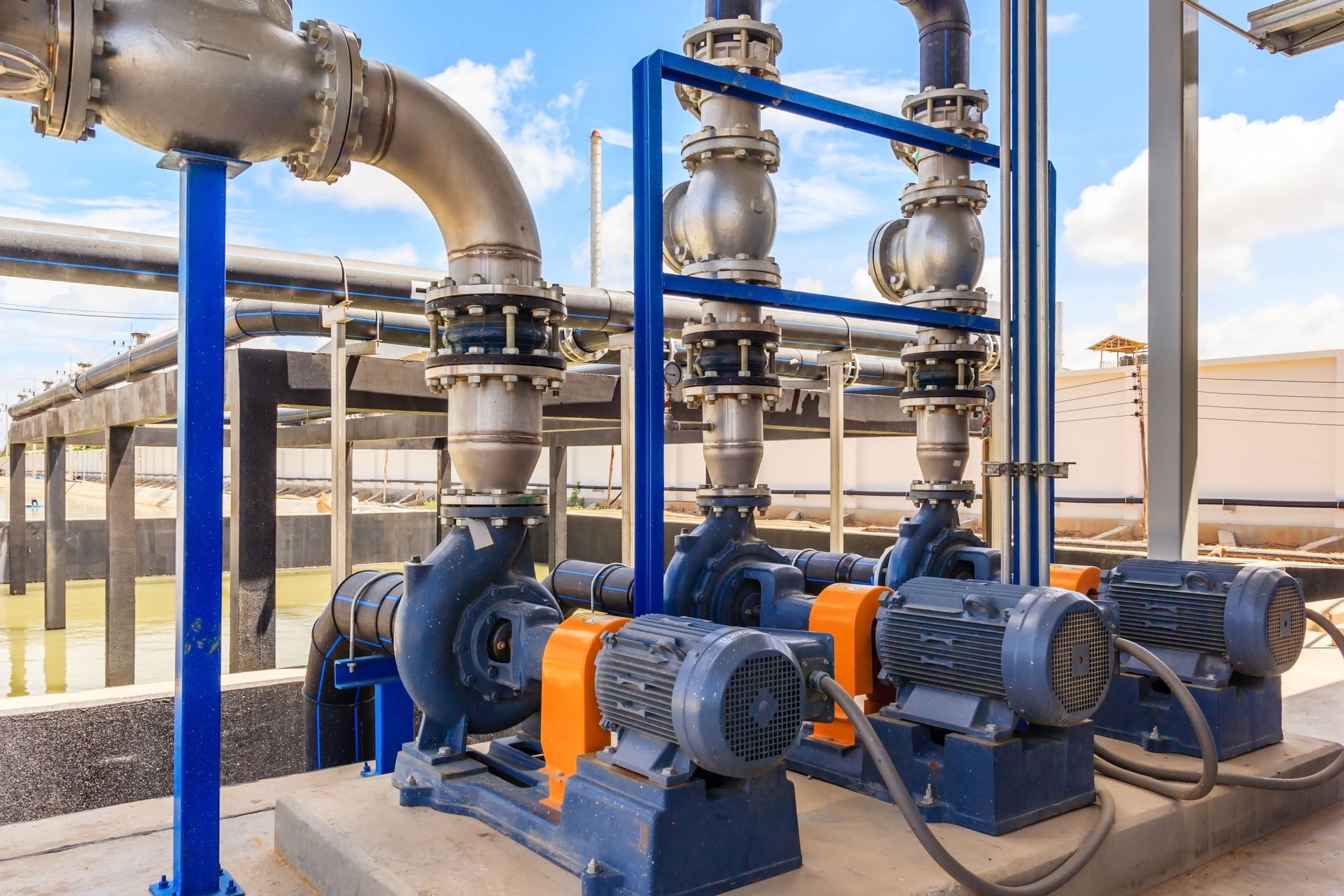
End suction centrifugal pumps and other fluid handling equipment place significant mechanical loads on the piping connected to them through vibration, thermal expansion, and the dynamic forces created by fluid movement at varying flow rates and pressures throughout normal operation and during startup and shutdown cycles.
Pipe fusion services create connections that distribute those mechanical loads across the fused joint without concentrating stress at the interface, the way bolted flanges and mechanical couplings do, which reduces the fatigue and wear at connection points that eventually leads to joint failure in systems that rely on mechanical connections at pump inlet and discharge locations. A fused connection at a pump interface also eliminates the regular maintenance requirement that flange bolt tightening imposes on mechanical connections, reducing the labor cost and operational interruption that comes with keeping mechanical joints within their specified torque range as thermal cycling and vibration work to loosen fasteners over time.
Supporting Long-Term Infrastructure Investment With a Longer Service Life
Water and wastewater infrastructure represent some of the largest and most consequential capital investments that municipalities, utilities, and industrial facilities make, and the jointing method used throughout the pipeline network has a measurable impact on how long that infrastructure performs before major rehabilitation or replacement becomes necessary. Pipe fusion services extend the functional life of HDPE pipeline systems to fifty years or more under proper design and operating conditions, which means a fused system installed today can be expected to serve well beyond the planning horizon that most infrastructure owners use when evaluating the total cost of ownership for major capital projects. Mechanical joints, even when properly maintained, introduce aging components and failure mechanisms that create maintenance obligations and eventually rehabilitation needs decades before a fully fused system of the same material and diameter would require equivalent attention from the facility's operations and maintenance team.
The advantages that fusion jointing delivers over mechanical connections are not marginal improvements in a few narrow performance categories — they represent a fundamentally different and more reliable approach to connecting piping systems that affects everything from installation speed and operational safety to long-term maintenance costs and system longevity in ways that compound significantly over the decades that infrastructure remains in service. From eliminating leakage pathways and withstanding pressure surges to supporting demanding bypass operations and reducing the lifetime maintenance burden on operators and facility managers, every advantage of fusion jointing reflects a superior connection method that mechanical alternatives cannot replicate, regardless of how carefully they are specified or maintained throughout the life of the system.
Choosing a provider with certified technicians, specialized equipment, and deep operational experience to perform fusion work correctly on every project is the most important single decision in realizing the full performance potential of fused piping systems. Titan Service and Equipment Repair proudly serves the Southeast region of the United States from their facility in Clayton, NC, offering pipe fusion services, end suction centrifugal pump services, and sewer and water bypass system installation and removal, backed by over 30 years of combined experience, certified fusion technicians, MSHA-trained employees, service within one business day available, free estimates on equipment brought to the shop, and the distinction of being a fully licensed, insured, woman and minority-owned, locally and family-owned business. For more information, contact us today!
Share On: